Products+
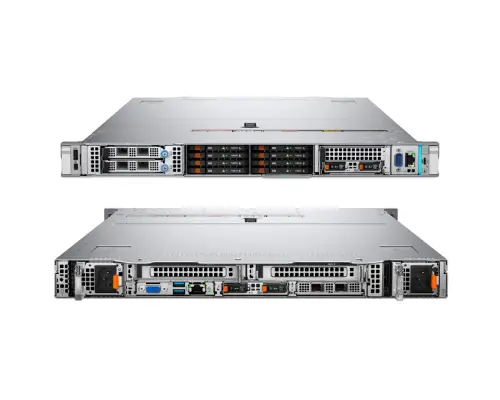
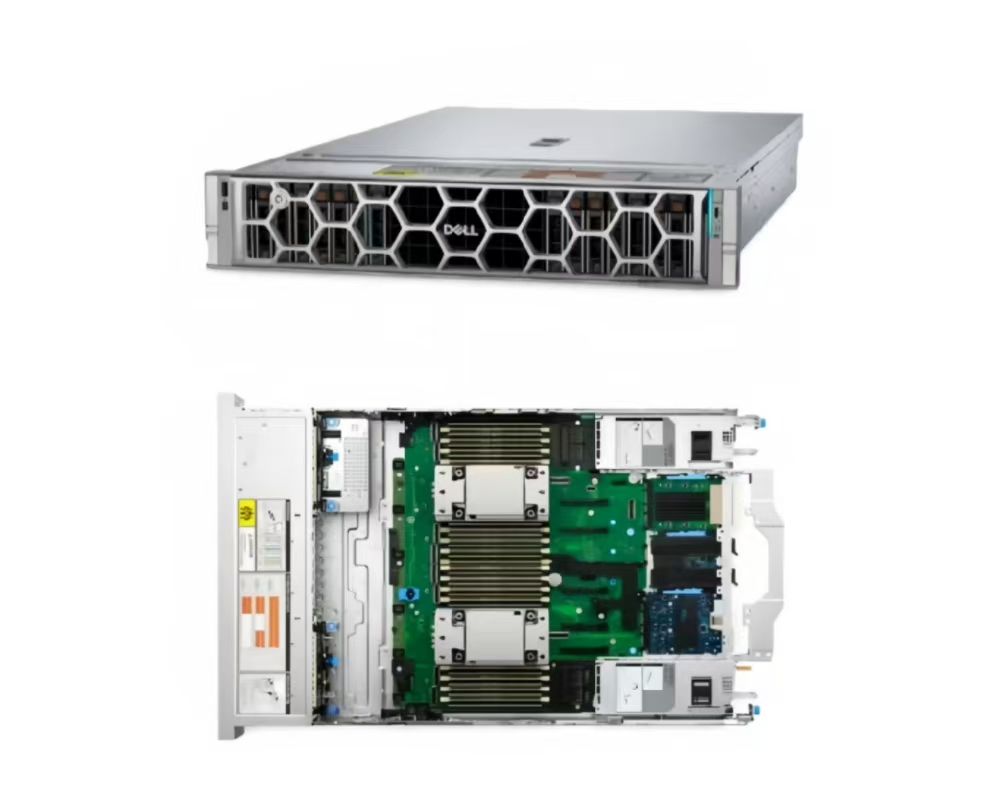
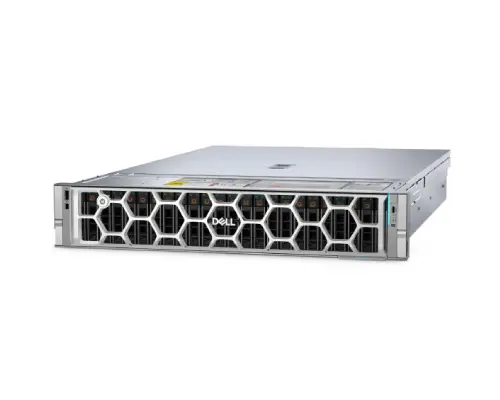
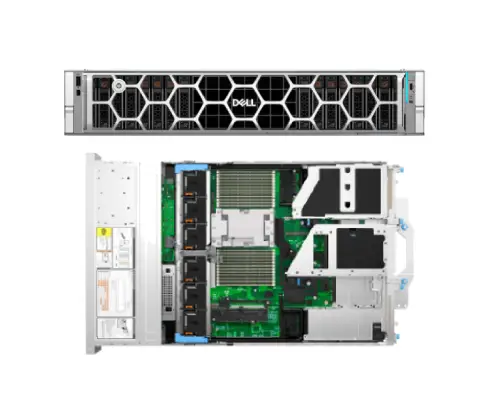
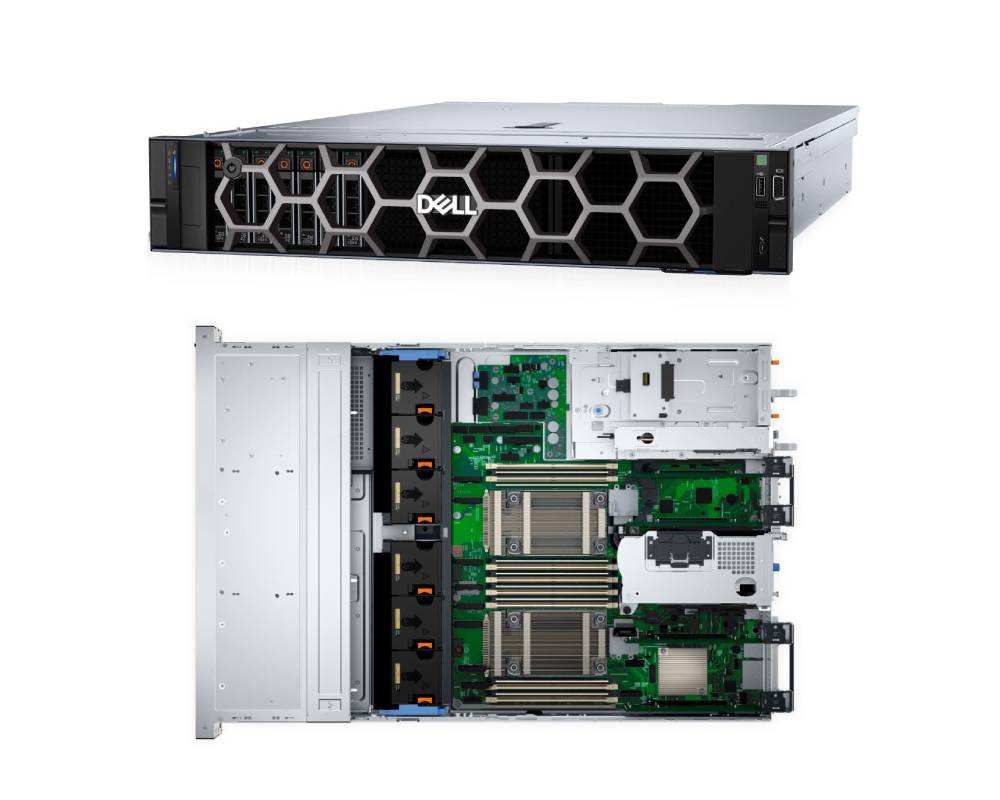
Dell PowerEdge R670 2 Socket 1U Rack Server
The Dell PowerEdge R670 is a high-density, dual-socket 1U rack server engineered to master demanding multi-tenant environments, dense virtualization, and cloud-native workloads. Driven by up to two Intel® Xeon® 6 processors, the R670 packs extreme performance, cutting-edge MRDIMM/RDIMM memory bandwidth, and PCIe Gen5 expandability into a space-saving 1U footprint.
Descriptions
Features
1. The Dell PowerEdge R670 is a high-density, dual-socket 1U rack server engineered to master demanding multi-tenant environments, dense virtualization, and cloud-native workloads. Driven by up to two Intel® Xeon® 6 processors, the R670 packs extreme performance, cutting-edge MRDIMM/RDIMM memory bandwidth, and PCIe Gen5 expandability into a space-saving 1U footprint. It is the enterprise standard for businesses looking to scale compute density without compromising data center space.
2. Empower your infrastructure with the Dell PowerEdge R670, designed for dense cloud-native environments, high-performance computing, and multi-tenant enterprise virtualization. Featuring support for up to two Intel® Xeon® 6 processors, this 1U dual-socket server delivers groundbreaking multi-threaded compute density and high-speed I/O scalability.
3. The PowerEdge R670 Rack Server excels in versatility and high-density expansion, supporting up to 288 total E-cores or 172 total P-cores and a flexible storage layout with standard 2.5-inch arrays or high-density EDSFF E3.S Gen5 NVMe direct drives. With up to 2 x16 PCIe Gen5 slots, it’s engineered for space-constrained workloads like distributed enterprise cloud architectures, heavy databases, and low-latency network fabrics.
4. With 32 DIMM slots capable of housing high-capacity DDR5 ECC Registered memory supporting RDIMMs or MRDIMMs up to 6400+ MT/s, the R670 ensures extreme memory bandwidth and system responsiveness, making it ideal for memory-bound corporate applications and heavy virtual machine profiles.
Specifications
|
Feature |
Technical Specifications |
|
|
Processor |
Two Intel Xeon 6 Processors with up to 144 cores per processor |
|
|
Memory |
• 32 DDR5 DIMM slots, supports RDIMM 2 TB max, speeds up to 6400 MT/s • Supports registered ECC DDR5 DIMMs only |
|
|
Storage controllers |
• Internal Boot: Boot Optimized Storage Subsystem (BOSS-N1 DC-MHS): HWRAID 1, 2 x M.2 NVMe SSDs or USB |
|
|
Drive Bays |
Front bays: • Up to 8 x EDSFF E3.S Gen5 NVMe (SSD) max 122.4 TB |
|
|
Hot swap Power Supplies |
• 1500 W Titanium 100—240 VAC or 240 VDC • 1100 W Platinum 100—240 VAC or 240 VDC • 800 W Platinum 100—240 VAC or 240 VDC |
|
|
Cooling Options |
• Air cooling |
|
|
Fans |
• High performance Silver (HPR SLVR) fans • Up to 4 sets (dual fan module) hot swappable fans |
|
|
Dimensions and Weight |
• Height – 42.8 mm (1.69 inches) • Width – 482 mm (18.98 inches) • Weight – 20.42 kg (45.02 pounds) |
Depth (for rear I/O configuration) • 817.94 mm (32.20 inches) with bezel • 815.14 mm (32.09 inches) without bezel |
|
|
|
Depth (for front I/O configuration) • 829.44 mm (32.66 inches) without bezel Note: The front I/O configuration does not support the bezel. |
|
Form Factor |
1U rack server |
|
|
Embedded Management |
• Open Server Manager (OSM) built on OpenBMC |
|
|
Security |
• Cryptographically signed firmware • Secure Boot |
• Silicon Root of Trust • TPM 2.0 FIPS, CC-TCG certified |
|
Network options |
OCP NIC card 3.0: 2 slots on the front or 2 slots on the rear |
|
|
GPU options |
Up to 2 x 75 W SW |
|
|
Ports |
Front Ports: • 1 x USB 2.0 Type C port • 1 x USB 2.0 Type A port (optional) • 1 x Mini-DisplayPort (optional) • 1 x DB9 Serial (with front I/O configuration) • 1 x Dedicated BMC Ethernet port (with front I/O configuration) |
Rear Ports: • 1 x Dedicated BMC Ethernet port • 1 x VGA • 2 x USB 3.1 Type A ports |
|
|
Internal Ports: • 1 x USB 3.1 Type A port (optional) |
|
|
PCIe |
• Up to 2 x16 Gen5 PCIe slots |
|
|
Operating System and Hypervisors |
• Canonical Ubuntu Server LTS • RedHat Enterprise Linux • SUSE Linux Enterprise Server |
|
|
OEM-ready version available |
From bezel to BIOS to packaging, your servers can look and feel as if they were designed and built by you. |
|
Dell PowerEdge R670 vs Related Dell PowerEdge Models
| Model | When to consider |
|---|---|
| Dell PowerEdge R470 | Choose R470 when a single-socket 1U platform is preferred for power-efficient scale-out and data services. |
| Dell PowerEdge R770 | Choose R770 when a 2U Intel Xeon 6 platform is needed for broader storage, PCIe and GPU flexibility. |
| Dell PowerEdge R660 | Consider R660 when a previous-generation 1U dual-socket Intel platform is sufficient. |
| Dell PowerEdge R760 | Consider R760 when a previous-generation 2U Intel platform is sufficient. |
| Dell PowerEdge R7725 | Choose R7725 when an AMD EPYC 9005-based 2U platform is preferred for high core count or AMD standardization. |